Home / Solid Panels Versus Open Bars Near Street Corners
Solid Panels Versus Open Bars Near Street Corners
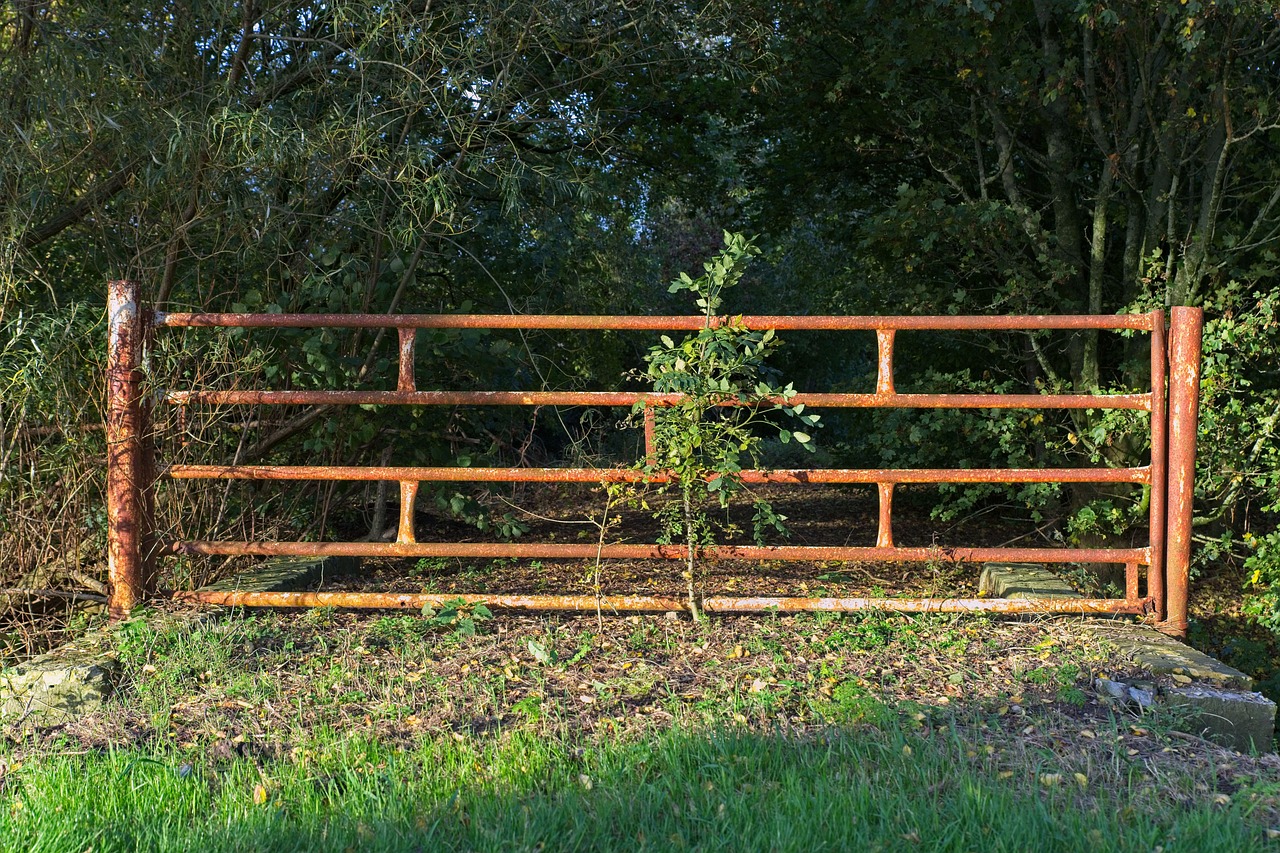
Near a street corner in Georgetown, open bars are the safer and easier choice for a gate and the fence beside it, and solid panels are the choice most likely to be refused. The reason is simple: a solid panel hides what is behind it, and a corner is where drivers most need to see. Open bars let the eye pass through while still giving a gate the strength and security an owner wants. Choosing between the two depends on where the gate sits relative to the corner, and the choice is easier to make with a few facts in hand.
What a solid panel does at a corner
A solid panel, whether sheet steel, tight slats or board style fill, blocks the line of sight from edge to edge. A driver stopped at the corner cannot see a pedestrian on the far side of it. A car approaching on the cross street is hidden until it reaches the corner itself. Cities restrict solid structures near intersections because of this, and Georgetown's sight triangle rule for corner lots reflects it. The exact limits are in the development code and should be confirmed with the planning office.
What open bars do
Vertical bars with real gaps between them let a driver see through the fence. A person standing behind the gate is still visible, and a car moving along the cross street can be tracked. Because the bars are thin, the open share of the surface is high, and a gate can stay under any openness limit with room to spare. Open bars also keep a corner feeling less enclosed, which neighbors tend to appreciate.
Where a solid panel is still possible
Not every part of a corner lot is subject to the strictest rule. The sight triangle covers an area near the corner, and beyond it the lot follows the ordinary fence rules for the zoning district. A solid fence along the rear or interior side of the lot, away from the corner and behind the front building line, is often allowed. A solid gate across a drive that sits well back from the intersection may also be allowed. The planning office can mark on a site plan where the line falls.
- Within the corner area: open bars, low height, thin posts.
- Beyond the corner area but in the front yard: still open, at the front yard height limit.
- Behind the front building line: solid is usually possible, within the height limit.
Compromise designs
Owners who want privacy and still need to meet the rule have several options. Closely spaced pickets, around two inches apart, give a strong feeling of enclosure from a distance while still counting as open. Horizontal slats with wide gaps provide a more modern look and block less. A solid lower section topped with open bars may be allowed in places, but the lower section counts as solid and needs to stay small. Landscaping behind an open fence adds privacy without adding to the structure, though plants must stay out of the sight area.
Security and open fencing
Many owners worry that open bars offer less security. A well built steel gate with a strong frame, a solid lock and bars set close enough to stop a person squeezing through is secure. Bars with pointed tops or a bar arrangement that is hard to climb help further. Open fencing also keeps a property visible to neighbors and passing patrol cars, which is a security benefit of its own.
Noise and dust
A solid panel blocks some road noise and dust. Open bars do not. A corner lot on a busy road may want some screening, and the right answer is often a combination: open fencing at the corner and along the sight area, and a solid barrier or dense planting behind the front building line where it can sit outside the rule.
Materials for open designs
- Square steel tube pickets: strong, simple and easy to paint.
- Round bar pickets: lighter in look, often used with decorative rings.
- Flat bar pickets: modern profile, easy to space evenly.
- Cable or rod infill: very open, suited to contemporary houses.
Finish and upkeep
A powder coat finish holds up well against Texas sun and rain, and a dark neutral shade keeps the bars from reading as heavy. Corner gates attract road dust and spray, so a finish that wipes clean is a practical choice. Check the bottom rail for rust each year, since splash from the street collects there.
Check the numbers before choosing
Ask the planning office three things for the address: where the sight area ends, what height applies inside it, and what share of the gate must be open. Get the answers in writing if possible. Share them with the fabricator, and ask for a drawing that shows the open percentage. A design drawn from the numbers is far less likely to need a second round.
At a Georgetown street corner, open bars win on safety, approval and cost of change. Solid panels belong further back, where the rules allow them.
A walk through two corner lots
Picture a corner lot in an older Georgetown block, with a narrow side yard facing the cross street. The owner wants a tall solid gate for privacy. The sight area covers most of the side frontage, so a solid panel would be refused. The practical answer is open bars along the corner and a solid screen set back behind the side of the house, where a pool or patio sits.
Now picture a corner lot in a newer subdivision, with a wide side yard and a drive that opens onto the side street well back from the corner. The sight area covers only the first stretch. A solid gate across the drive, set outside that area and within the height limit, may be allowed. The same rule gives different answers on different lots, which is why a site plan with the area shaded is the best first step.
Test before committing
Build a cardboard mock up the height and width of the proposed panel, stand it at the corner and walk the cross street. If the view of the corner from the driver's seat is blocked, the design needs to open up. A mock up costs little and settles an argument fast.
Maintenance of the open design
Open bars collect leaves, trash and windblown litter at the base. A quick sweep and a wipe of the bottom rail every few weeks keeps the corner tidy and the finish healthy.